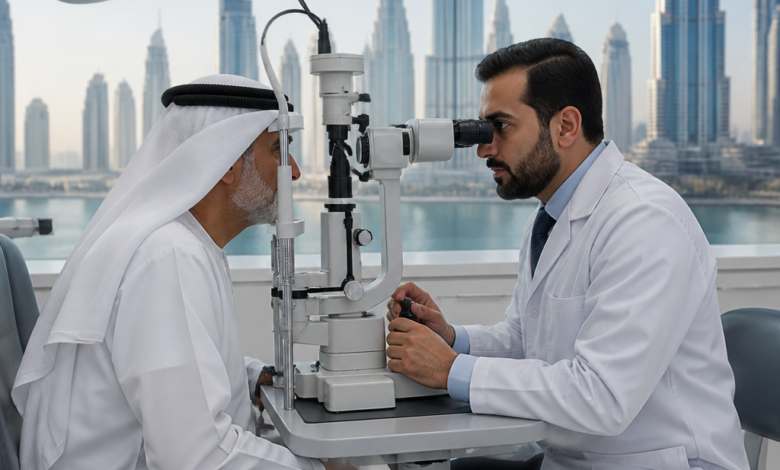
The UAE has emerged as a regional hub for advanced medical specialties, with ophthalmology standing out as one of the fastest-evolving fields. As the population ages and chronic conditions like diabetes become more prevalent, the demand for sophisticated eye care has increased dramatically. Modern eye care now extends far beyond routine vision correction, encompassing complex surgical interventions, management of sight-threatening diseases, and integration with broader systemic health monitoring.
For healthcare systems in Abu Dhabi and across the Emirates, investing in subspecialized ophthalmology represents both a clinical imperative and a strategic opportunity. The eye serves as a window to overall health, with conditions like diabetic retinopathy, hypertensive changes, and even neurological disorders often first detected during comprehensive eye examinations. This intersection of vision care and systemic medicine has redefined how medical institutions approach patient care.
The Scope of Modern Ophthalmology
Contemporary eye care encompasses a remarkably broad spectrum of subspecialties. Retinal specialists manage conditions affecting the back of the eye, including macular degeneration and diabetic complications. Corneal experts handle transplants and refractive procedures. Glaucoma specialists monitor intraocular pressure and nerve damage over decades. Pediatric ophthalmologists address childhood vision development, while oculoplastic surgeons reconstruct the delicate structures around the eye following trauma or disease.
Each subspecialty requires years of focused training beyond general ophthalmology. A vitreoretinal surgeon, for instance, completes medical school, ophthalmology residency, and a fellowship specifically in surgical retina before treating patients independently. This depth of specialization means that complex cases often benefit from collaborative care among multiple ophthalmologists, each contributing expertise in their domain.
Diagnostic Technologies Reshaping Early Detection
Optical coherence tomography has revolutionized how clinicians visualize retinal layers with near-microscopic resolution. This non-invasive imaging allows detection of disease months or years before symptoms appear. Similarly, advanced visual field testing can identify glaucomatous nerve damage at stages when intervention is most effective. Corneal topography maps the eye’s surface with precision that enables customized surgical planning.
These diagnostic capabilities generate enormous amounts of data, requiring sophisticated interpretation. Artificial intelligence applications are beginning to assist with pattern recognition in retinal scans, though expert clinical judgment remains essential for treatment decisions. The combination of advanced imaging and experienced subspecialists creates a diagnostic environment where subtle abnormalities rarely go unnoticed.
Integration With Chronic Disease Management
The UAE faces rising rates of diabetes, with estimates suggesting over 15% of adults have the condition. Diabetic retinopathy remains a leading cause of preventable blindness, making regular screening essential. Modern protocols call for annual dilated examinations for all diabetic patients, with more frequent monitoring for those showing early changes. When detected promptly, laser treatment or anti-VEGF injections can preserve vision in the majority of cases.
This screening process requires coordination between endocrinologists, primary care physicians, and ophthalmologists. Healthcare systems that establish clear referral pathways and ensure follow-up compliance see significantly better outcomes. Some institutions now use telemedicine and remote retinal imaging to extend screening reach, though this approach works best when backed by accessible subspecialty care for patients needing intervention.
Surgical Innovation and Patient Outcomes
Cataract surgery has evolved from a procedure requiring weeks of recovery to an outpatient operation lasting minutes, often with patients resuming normal activities within days. Femtosecond laser platforms enable bladeless techniques with enhanced precision. Premium intraocular lenses now correct astigmatism and provide multiple focal points, reducing dependence on glasses.
More complex procedures have seen similar advances. Vitrectomy for retinal detachment or macular holes uses microincision techniques with faster healing. Minimally invasive glaucoma surgery offers options between traditional trabeculectomy and medical management alone. Corneal cross-linking can halt progression of keratoconus in young patients, preventing the need for transplantation later in life. As medical advances continue to reshape healthcare delivery, ophthalmology exemplifies how technological refinement translates to measurable patient benefit.
Accessing Subspecialized Eye Care in Abu Dhabi
The capital has seen substantial investment in tertiary medical facilities over the past decade. Cleveland Clinic Abu Dhabi represents this expansion, bringing multispecialty care including comprehensive ophthalmology services to the region. Patients seeking treatment for complex retinal conditions, glaucoma management, or corneal disease can access fellowship-trained subspecialists without traveling internationally. When choosing the best eye doctor in abu dhabi for specific conditions, subspecialty training and experience with similar cases matter more than general credentials alone.
This local availability of advanced care has practical implications. Chronic conditions like glaucoma require monitoring every few months for years or decades. Diabetic retinopathy patients may need injections every four to eight weeks during active treatment phases. Post-surgical follow-up for complex retinal procedures involves multiple visits in the first weeks after surgery. Having subspecialized care accessible within the emirate reduces the logistical burden these treatment protocols impose on patients and families.
The Multidisciplinary Approach to Vision Preservation
Optimal eye care increasingly involves coordination across specialties. Thyroid eye disease requires collaboration between ophthalmologists and endocrinologists. Uveitis may involve rheumatologists managing underlying autoimmune conditions. Orbital tumors demand coordination with oncologists, neurosurgeons, and radiation specialists. Traumatic injuries often require combined care from oculoplastic surgeons, corneal specialists, and sometimes retinal surgeons depending on the extent of damage.
Healthcare institutions that facilitate this coordination through integrated systems and regular multidisciplinary conferences tend to achieve better outcomes. Patients benefit when specialists communicate directly rather than through fragmented referral letters, and when treatment plans account for all aspects of their health rather than addressing the eye in isolation. Just as spine care specialists have demonstrated the value of patient-focused multidisciplinary approaches, ophthalmology increasingly embraces this model for complex cases.
Practical Steps for Protecting Vision Health
Regular comprehensive eye examinations remain the foundation of vision preservation. Adults without risk factors should have baseline examinations by age 40, with frequency increasing after 60. Those with diabetes, family history of glaucoma, or high myopia need more frequent monitoring regardless of age. Children benefit from vision screening before starting school to identify amblyopia while treatment remains effective.
Symptoms warranting prompt evaluation include sudden vision loss, flashes of light, new floaters appearing suddenly in large numbers, curtain-like shadows in peripheral vision, and eye pain accompanied by redness or vision change. These can signal retinal detachment, acute glaucoma, or other conditions where hours matter for outcomes. Many people delay seeking care for subtle symptoms, only to discover treatable conditions have progressed beyond optimal intervention windows.
UV protection through quality sunglasses, smoking cessation, blood pressure control, and glycemic management in diabetics all contribute to long-term eye health. For those with established conditions, medication adherence matters enormously. Glaucoma drops only work when used daily as prescribed. Missing injections for wet macular degeneration can allow irreversible vision loss between scheduled appointments.
Looking Forward
The trajectory of ophthalmology points toward increasingly personalized and preventive care. Gene therapy shows promise for inherited retinal diseases once considered untreatable. Sustained-release drug delivery systems may eventually reduce the burden of frequent intravitreal injections. Artificial intelligence will likely enhance diagnostic accuracy and predict disease progression, allowing more targeted intervention.
For healthcare systems in the UAE, maintaining access to these advancing capabilities requires continued investment in both technology and subspecialty expertise. The region’s position as a medical hub depends on offering care comparable to leading international centers while remaining geographically accessible to patients across the Middle East and North Africa. As the population ages and chronic disease prevalence rises, demand for sophisticated ophthalmology services will only increase, making strategic planning in this field essential for comprehensive healthcare delivery.