Welcome to our guide on construction site cleaning.
Here at Brisbane Sweeping, we’ve worked on dozens of construction sites across Brisbane, the Gold Coast, and the Sunshine Coast. We’ve seen what happens when you ignore dust control, and floors become cluttered with debris that gets in everyone’s way.
In this guide, we’ll cover:
- What construction site clean-ups actually involve
- How to control dust during active construction
- What causes slip and trip hazards on-site
Read on to learn how to keep your site clean and workers safe.
What Is Construction Site Cleaning?
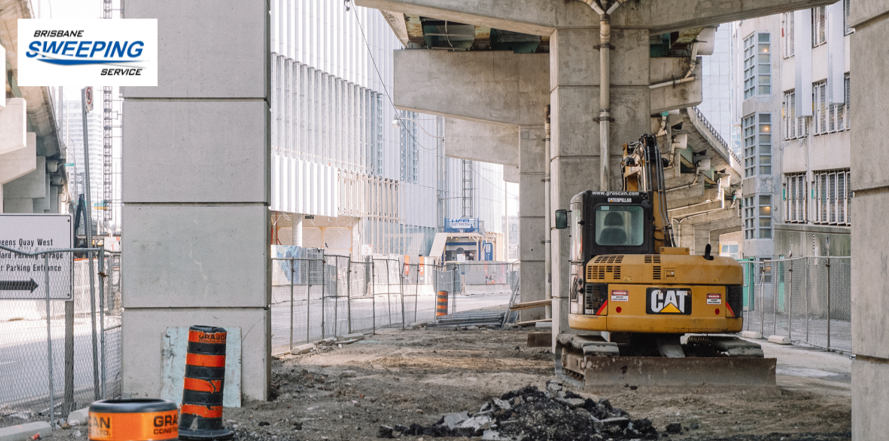
Construction site cleaning is the removal of debris, dust, and waste during and after building work. It happens in two stages: daily clean-ups while the project is still going, and a final clean once everything finishes.
Let’s get into more detail about them.
Daily Clean-Ups During Active Construction
The regular clean-up routine on a construction site protects everyone and helps work run more smoothly.
A standard daily clean-up routine requires you to clear out the collected debris and pull out any nails sticking up from scrap timber at the end of every shift. You also have to clear out the materials you no longer need and move them straight into the waste container for easy disposal.
We’ve seen that when walkways are clear, workers can move through entryways without constantly facing hazards.
Pro tip: Keep an eye on your bin waste container capacity because it often limits how much you can clear yourself before arranging a pickup.
See also: How Routine Garage Door Maintenance Prevents Expensive Repairs
Post-Construction Cleaning Service
Post-construction cleaning begins once all the trades finish their work and leave the site. This part involves performing a thorough cleaning, which usually means scrubbing floors, sweeping factory floors, wiping windows inside and out, and paying attention to the cleanliness of every surface.
The final cleaning is important because the site has to pass inspection before the owner gets the keys. That’s why if there’s dust in the window tracks or grout haze on the tiles, you’ll get called back to fix it (trust us, it doesn’t feel good to get callbacks over even a single smudge).
How Do You Control Dust on a Construction Site?
You control dust by wetting surfaces, using HEPA vacuums, covering materials, and installing barriers. Most methods are simple enough, but you have to stay consistent with your preferred method throughout a project.
Here are some of the most popular construction site cleaning methods:
- Water Suppression: Water trucks spray the soil and busy areas several times a day. The extra moisture from the spray keeps dust from lifting into the air in outdoor environments, so wind has far less dirt to spread around.
- HEPA Vacuums: Did you know HEPA vacuums trap the fine dust that regular vacuums push back into the air? Specifically, they work well after cutting or grinding concrete in industrial settings, where silica dust creates serious health risks.
- Ride-On Sweepers: For larger areas, sweepers with independent rolling brushes clean the ground quickly. They sweep and collect debris in one pass, then store it in a removable waste container so work can continue without long clean-up breaks.
- Silica Dust Containment: Silica causes dangerous lung damage with long-term exposure. That’s why wet cutting is the preferred method for concrete work. Also, Safe Work Australia has strict exposure restrictions, and you need to stay under that limit.
- Covering Stockpiles: Tarps and plastic sheets keep the wind from blowing dust off sand, gravel, and soil piles. When the materials are used up, you can remove the main cover and throw it away for quick, simple cleanup.
- Barriers and Perimeter Controls: You can use fencing and wind barriers to keep dust inside the construction site. It’s also a good idea to set up wheel-wash stations at the exit so trucks don’t spread mud onto public roads. This way, you won’t get any council complaints.
Your team can manage dust more confidently and maintain safer indoor and outdoor environments with all these controls in place.
What Causes Slip and Trip Hazards on Construction Floors?
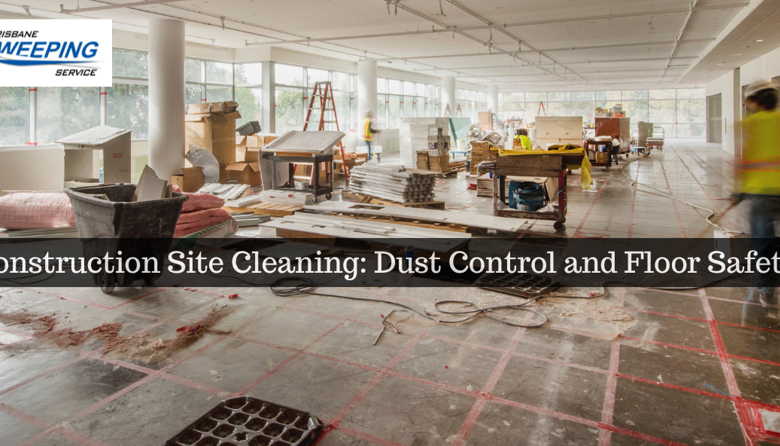
Slip and trip hazards come from loose debris, wet surfaces, and uncovered floor openings. But you can avoid many of these issues when you follow a simple daily housekeeping routine.
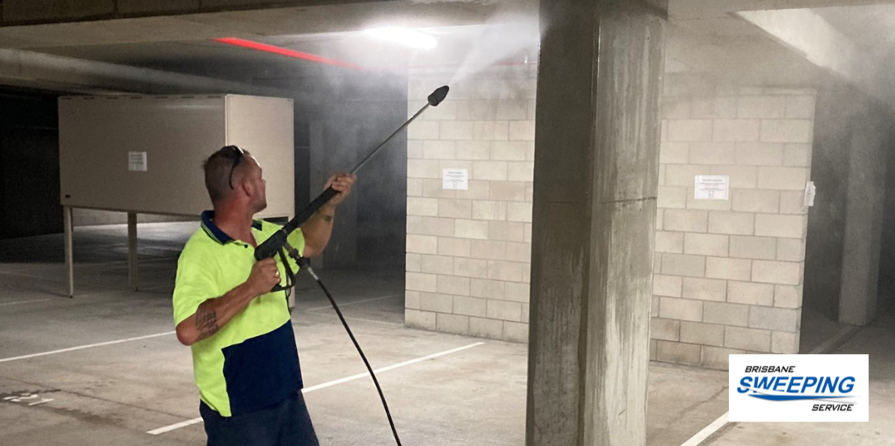
We’ll now explain how to handle each type of problem easily.
Loose Debris and Protruding Nails
Scrap timber with nails sticking out is one of the most common hazards on busy construction sites. We’ve seen workers trip over offcuts, step on sharp pieces, and get hurt because the mess builds up so quickly.
And the worst part is that these hazards are completely preventable, which makes it even more frustrating when someone gets injured.
But how do you fix these issues? You need to ensure that collected debris goes into a waste container nearby rather than shoving it in a corner and totally forgetting it (tip: never get into the habit of using a “temporary” corner).
Also, don’t forget about your walkways. They fill up quickly on busy days, and once debris gathers there, the waste fallback sweeper has to sort it out to keep people safe.
Wet Surfaces and Uncovered Floor Openings
Does your floor have water, oil, or grout on it? That’s bad news because any wet surface will eventually send someone sliding.
For example, a small puddle near a doorway on a busy commercial site can catch a worker off guard, and one quick step into it can send them straight to the ground. They might walk away with only light bruises most of the time. In reality, the situation can become much more serious very quickly.
But that’s not all. Floor holes are another hazard that can catch people by surprise, so each one should have a solid cover or a guardrail to keep workers safe.
Last but not least, poor lighting is the other factor that increases the risk. When people can’t see the ground clearly, they are bound to step into a hole without realising it.
Get Your Free Quote Today
A clean site keeps your crew safe, your schedule on track, and your clients happy. And when you stay consistent with daily tidy-ups and keep hazards under control, it gives everyone a better place to work.
If you want support with dust control or floor cleaning on your next project, our team at Brisbane Sweeping can help you. Call us on 0423 585 333 for a free quote today, and we’ll organise a visit to see exactly what your site needs for a cleaning service.